
Digital Marketing
·
April 10, 2026
How SaaS Companies Handle Billing Disputes & Chargebacks
Learn how SaaS billing disputes happen, what triggers chargebacks, and how both sides can resolve them faster.

What it actually costs to track 50 prompts across ChatGPT, Perplexity, Gemini and Google AI for a SaaS company, compared across 8 AI visibility tools.

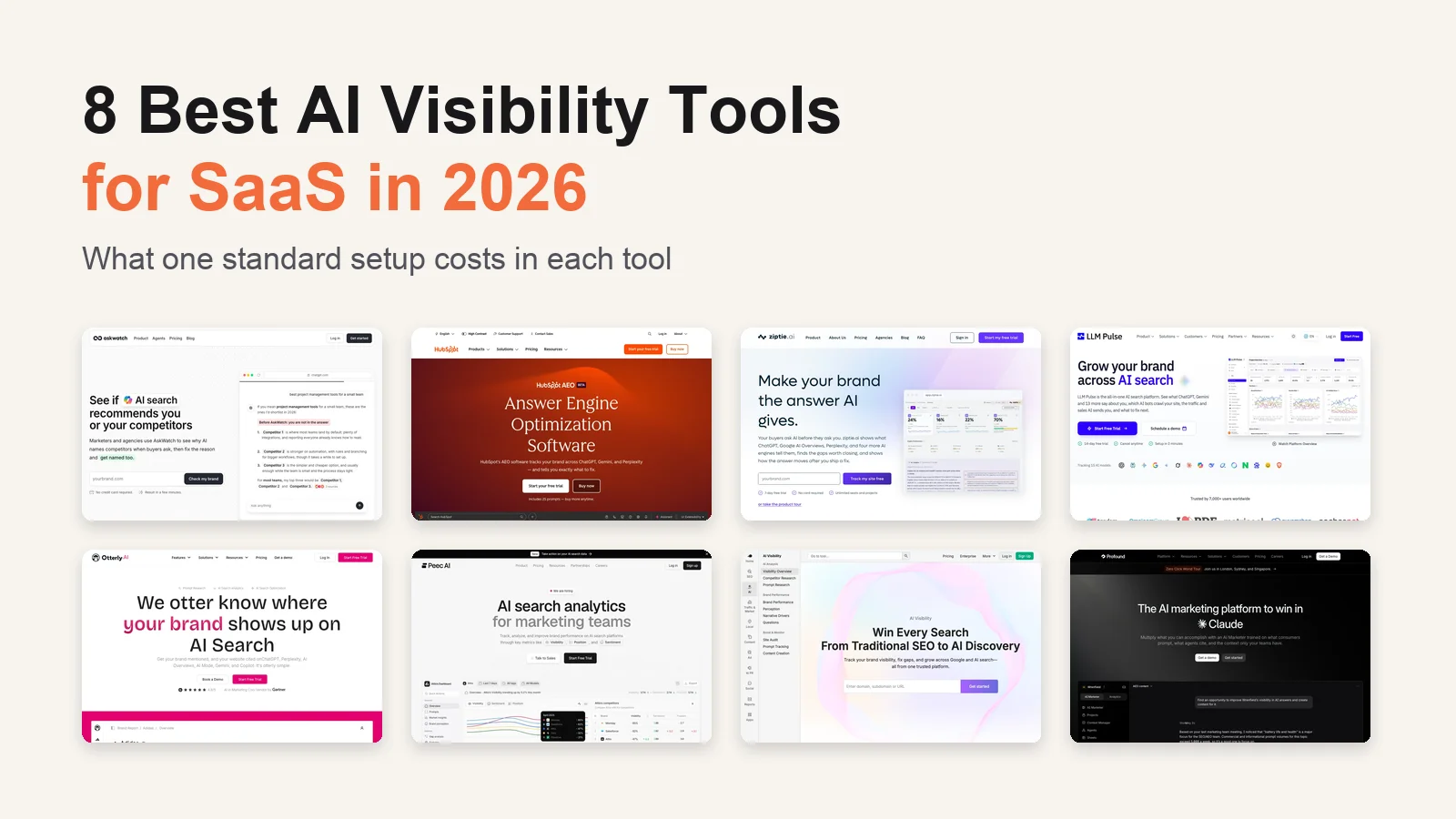
Short answer: for a SaaS company, an AI answer works like a shortlist: "best [category] for [use case]", "[competitor] alternatives", "[A] vs [B]". The tool you pick should track those prompts with your competitors named and show which pages (G2, Capterra, Reddit, comparison posts) the AI cites. A standard setup of 50 prompts on four engines, checked daily, costs from about $56 to about $250 a month depending on the tool, as of October 2026.
Your buyers now ask ChatGPT for a shortlist before they open a review site or your pricing page. If your product isn't in that answer, the deal starts without you, and nothing in your CRM or web analytics shows it happened.
An AI visibility tool closes that blind spot for a SaaS team. You give it the shortlist questions your buyers ask (category, alternatives and comparison prompts), and it reruns them every day or week. You see which products each answer recommends, whether yours is one of them, and whether the answer leans on G2, Capterra, Reddit or a competitor's comparison page to decide.
These tools' pricing models don't line up: some charge per prompt, some per engine, some per answer, some in euros. So instead of ranking them, this guide prices one setup in every tool: 50 SaaS-style prompts on ChatGPT, Perplexity, Google AI Overviews and Gemini, checked every day.
How we built it: in October 2026 we read each vendor's pricing page, configurator and help docs, and did the math. We didn't run trials, so there are no interface screenshots or accuracy claims here, only plans, limits and prices you can check yourself. AskWatch, our top pick, comes first. The rest are grouped by situation: running on HubSpot, a lean budget, a growing marketing team, or an enterprise.
G2 asked 1,076 B2B software buyers in March 2026 what shapes their shortlist. AI chatbots came first at 54%, and software review sites came second at 43% [2]. In the same survey, 51% of buyers said a chatbot, more often than Google, is where their research begins [1]. When buyers judged an AI answer, 45% said a citation from a review site was the signal that gave them the most confidence [2].
Put those numbers together and a SaaS company has two places to show up:
That second layer is why citation data is a hard requirement for SaaS teams, not a nice-to-have report. A tool that only tells you "mentioned 30% of the time" can't tell you which review profile or listicle to work on.
Reviews still carry weight once buyers leave the chat. TrustRadius found that 63% of technology buyers used AI during their purchase, and 74% use reviews to inform the decision [3]. AI changed where research starts, and review sites now feed both steps.
The traffic that does come from AI can be worth a lot. Ahrefs reported that AI search sent 0.5% of its visitors but 12.1% of its signups [4]. That is one SaaS company's data, not a benchmark, but it shows why a small channel deserves a tracker.
Before comparing tools, decide what you'll track. Prompts for a SaaS product fall into six types. The examples below use Acme, a fictional project management tool for agencies. Asana and Monday appear only as stand-ins for "a competitor".
A practical starting set of 50 prompts: 15 category, 10 alternatives, 10 comparison, 5 integration, and 10 job-to-be-done or price prompts. Category and alternatives prompts show whether you make the shortlist at all. Comparison and integration prompts show how the AI describes you once you're on it.
That set of 50 is the "standard setup" priced below.
All prices are monthly billing, USD unless noted, as of October 2026.
The setup: 50 prompts (the set above) × ChatGPT, Perplexity, Google AI Overviews and Gemini × daily. That's about 6,000 AI answers a month. We picked these four engines because almost every tool supports them. Where a tool can't cover one, the table says so.
Prices checked on vendor pricing pages and configurators in October 2026, monthly billing, USD, excluding tax [5][7][8][10][11][13][14][15][17].
The cheapest setup isn't automatically the best one. ZipTie is cheapest but doesn't report a position metric, so you'll know you were mentioned, not whether you were first or fifth. LLM Pulse tracks weekly by default, its daily plan starts without a trial, and sentiment begins on Growth. HubSpot AEO can't run this setup at all because it has no AI Overviews. Semrush's Prompt Tracking covers two of the four engines, and Semrush doesn't say whether a prompt tracked on two engines uses one prompt slot or two. If it uses two, you'd need 100 slots, which is $219.
If you want all six major engines, the prices move differently. Adding AI Mode and Copilot takes ZipTie to $79.50 and LLM Pulse to $94 plus €15 for the Copilot add-on [9]. Peec AI and AskWatch both land at $200: Peec as three extra $35 models, AskWatch as the 10,000-answer tier. Otterly rises to $307 with Gemini and AI Mode add-ons. Semrush's Prompt Tracking and HubSpot AEO can't cover six engines.
"n/s" means not stated on the vendor's site, which isn't always the same as "no".
Only HubSpot AEO connects to HubSpot natively. If you want AI visibility next to CRM data, that's HubSpot AEO. Every other tool here hands data over through CSV exports, an API, an MCP server or Looker Studio, and you'd do the joining yourself.
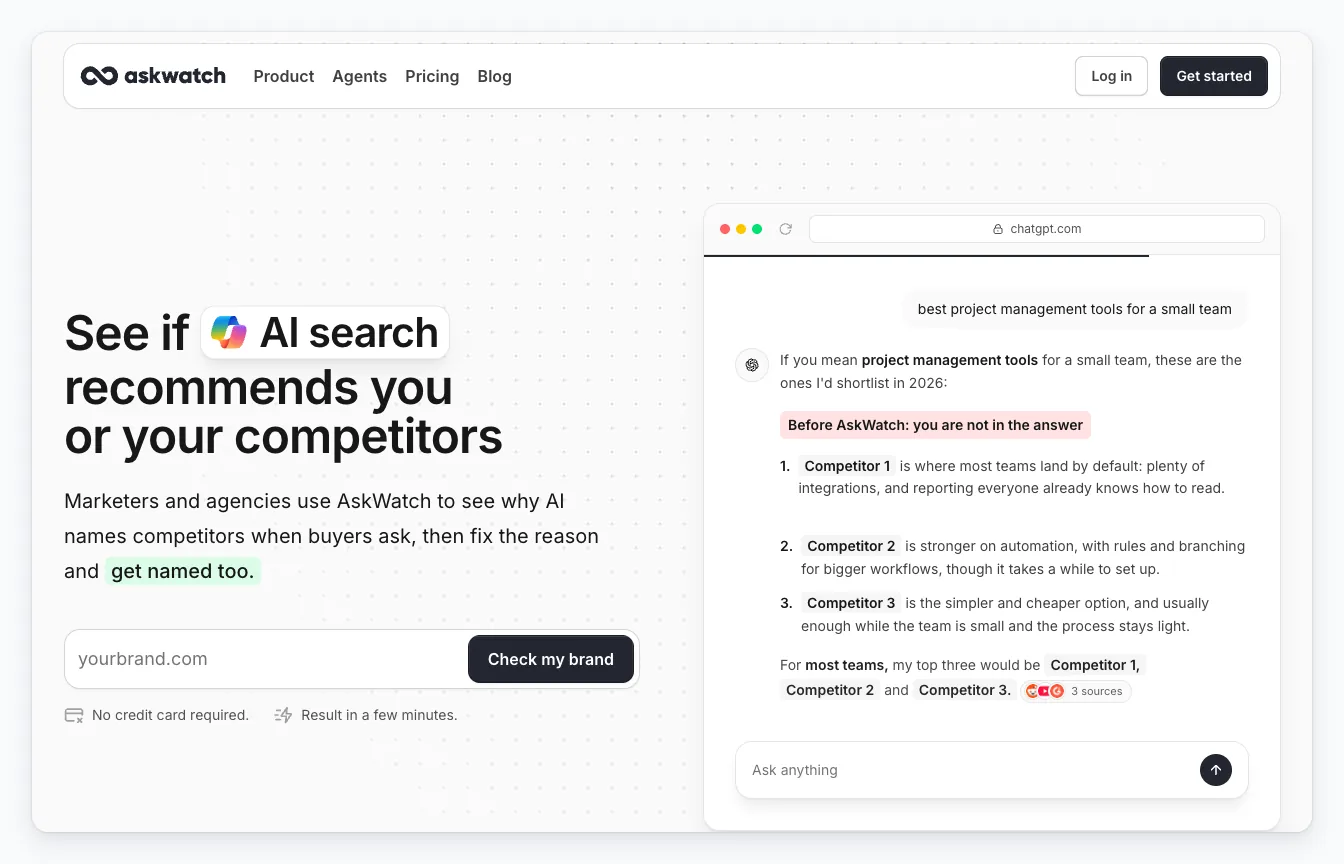
AskWatch charges for AI answers, not for prompts, engines or seats. All six major engines are on every plan at no extra cost: ChatGPT, Perplexity, Gemini, Google AI Overviews, AI Mode and Copilot. Websites, workspaces and people are unlimited, which helps a SaaS company with several products or markets: the bill follows the answers you run, not the number of sites or seats.
What you get on the entry plan:
Watch out for:
Setup cost: $125/month (5,000 answers plus 1,000 extra); all six engines cost $200. Pricing: [13].

HubSpot AEO is HubSpot's own AI visibility tracker, still labeled Beta. For a SaaS team that already runs marketing on HubSpot, the draw is that visibility data and recommendations sit in the same account as your content tools. You don't need a HubSpot subscription to buy it on its own.
What you get on the entry plan:
Watch out for:
Setup cost: not available. HubSpot AEO can't cover AI Overviews, and the price for 50 prompts isn't published. Pricing: [5].
ZipTie and LLM Pulse run our full standard setup for under $100. Otterly.AI is here for its $29 entry plan; at 50 prompts it costs more (see the table above).
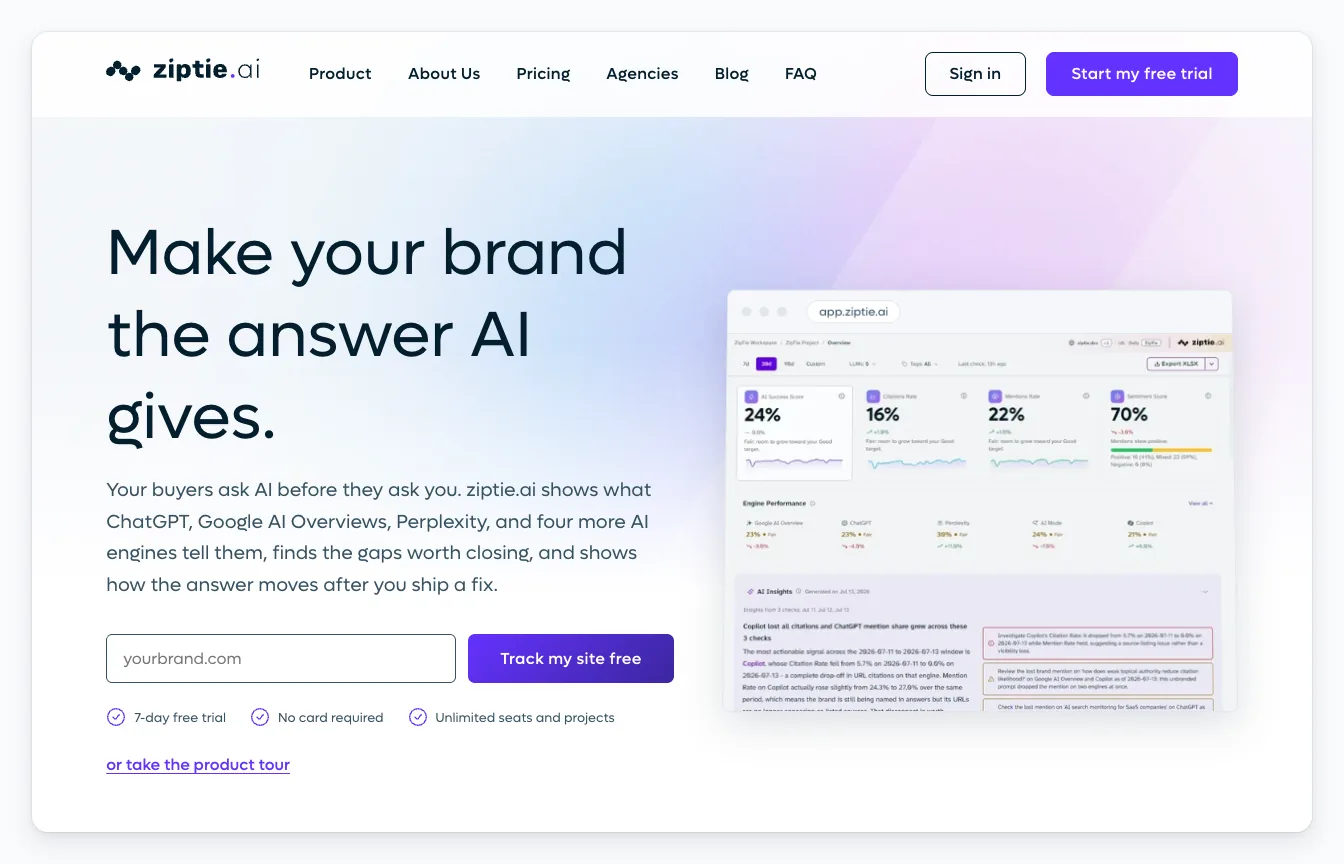
ZipTie has no plan tiers. You choose how many prompts to run, how often, and on how many engines, and the price follows. A daily prompt on one engine costs $0.30 a month, about $0.01 per check, and each extra engine is slightly discounted [7]. For a SaaS team that wants to start small and scale prompt by prompt, that's the most transparent pricing in this list.
What you get on the entry plan:
Watch out for:
Setup cost: $55.50/month. Trial: 7 days, no card, 25 daily prompts on ChatGPT, AI Overviews and Copilot. Pricing: [7].
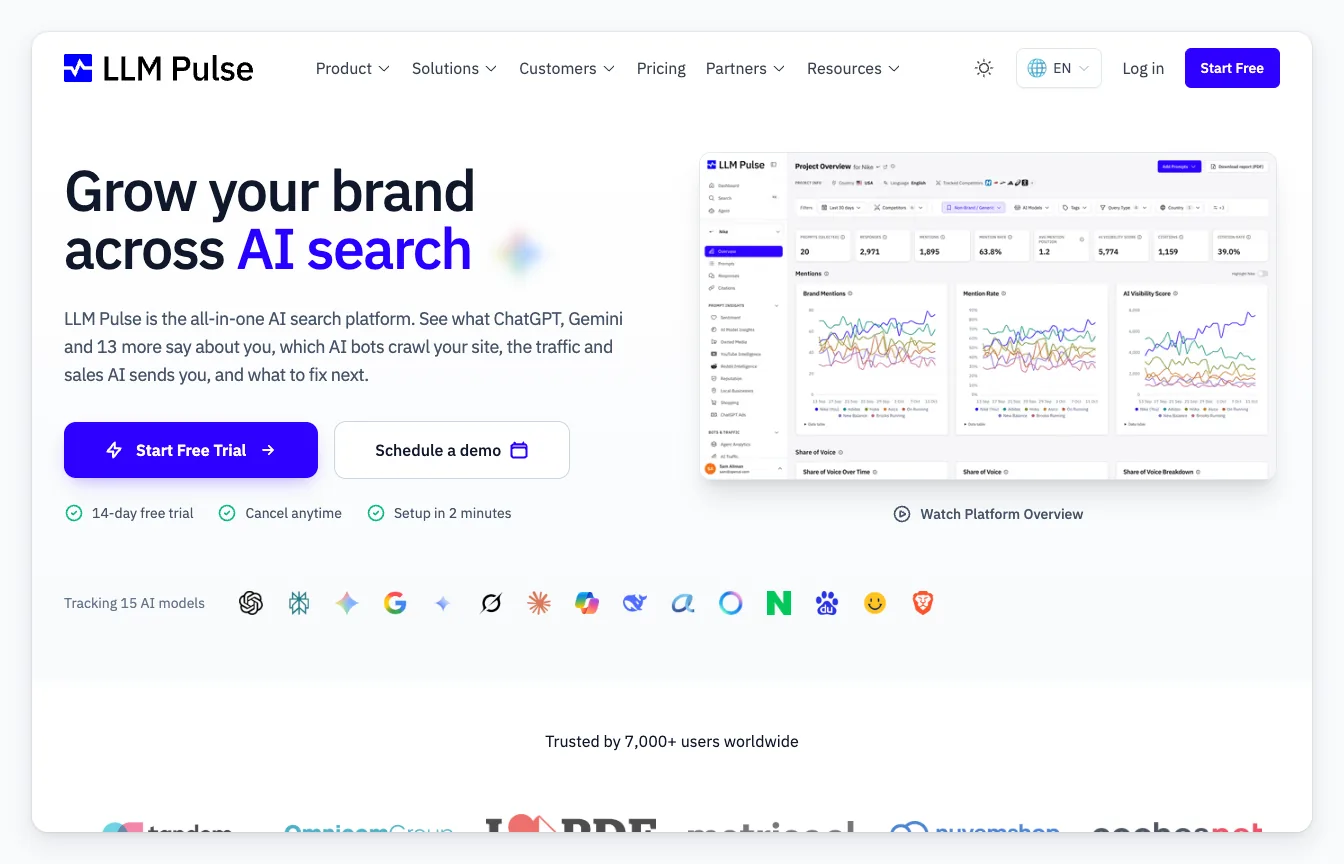
LLM Pulse is priced in euros, with a low entry price and the longest list of optional engines here, including Claude, Copilot, Grok, DeepSeek and regional engines such as Naver and Baidu as paid add-ons. It suits a SaaS team that wants Google's AI surfaces and an MCP server without paying for an API tier.
What you get on the entry plan:
Watch out for:
Setup cost: $94/month. Pricing: [8].
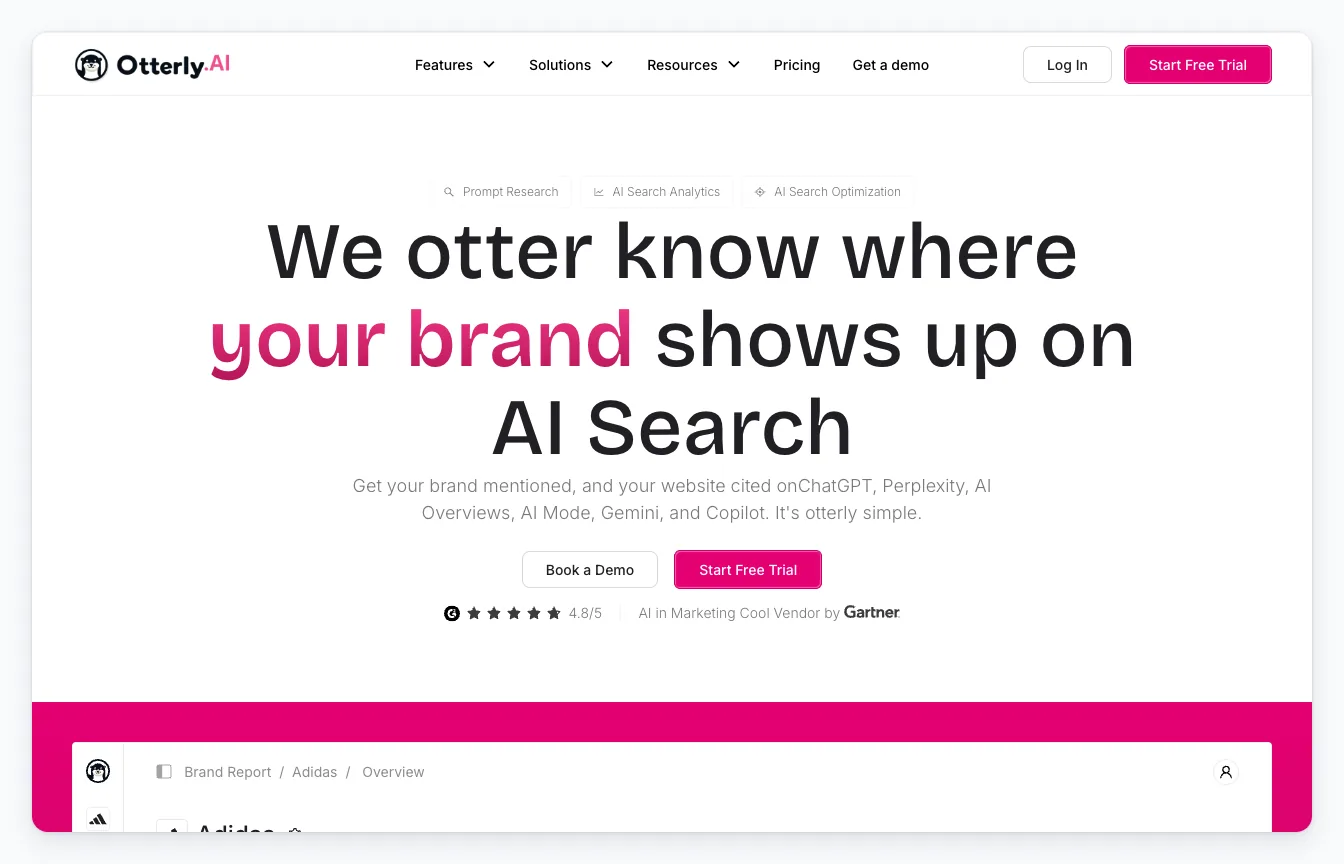
Otterly is the cheapest way in: $29 a month gets you daily tracking on four engines. For an early-stage SaaS company that wants to see its 15 most important prompts before committing to a full program, that's enough. The jump to a full setup is steep, though.
What you get on the entry plan:
Watch out for:
Setup cost: $248/month (Standard plus Gemini). Trial: 7 days. Pricing: [10].
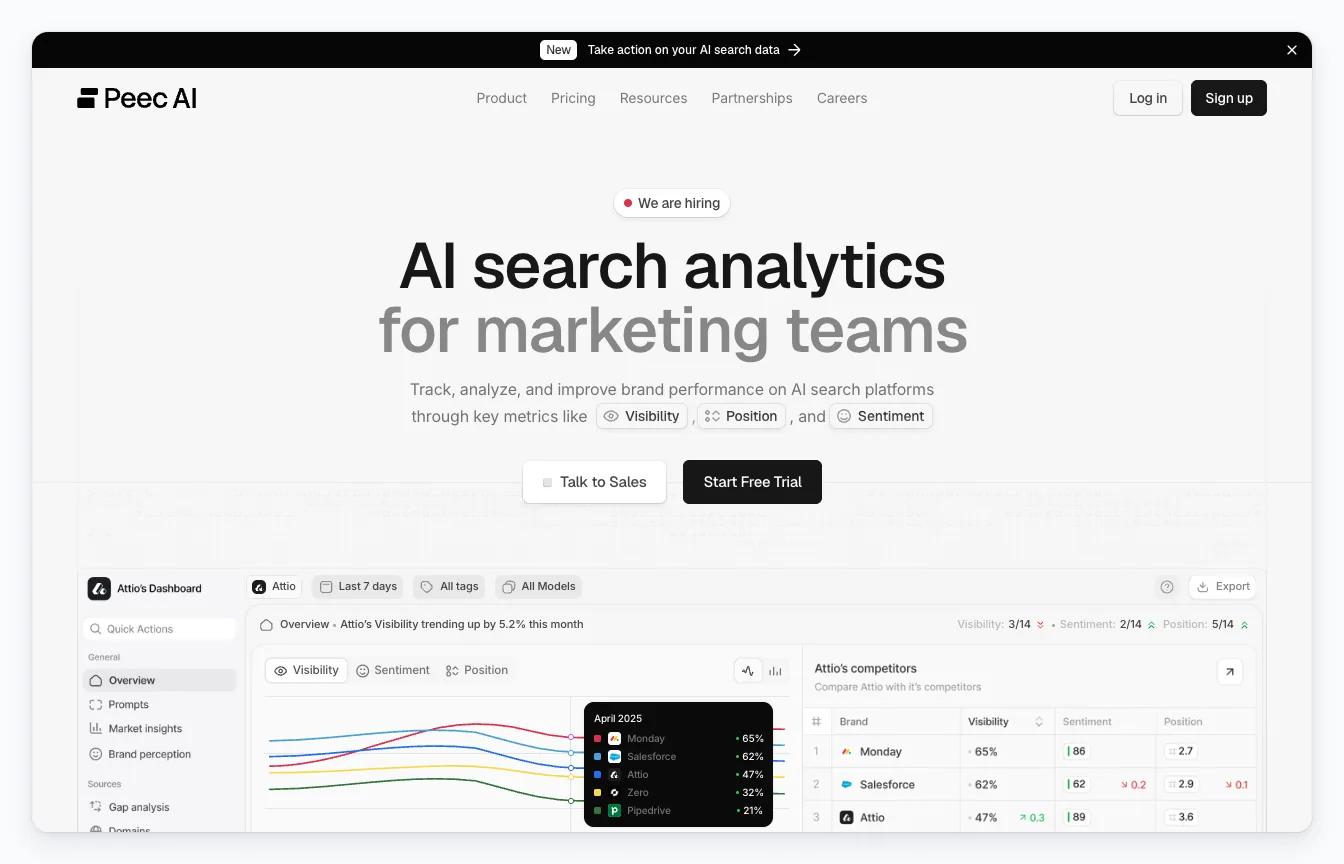
Peec AI is a self-serve daily tracker built for marketing and SEO teams. Every plan has unlimited users, which helps when product marketing, content and demand gen all want to see the same prompts. Its source analytics classify cited pages, which maps well to the G2-and-comparison-page work SaaS teams do.
What you get on the entry plan:
Watch out for:
Setup cost: $130/month (Starter plus Perplexity). Trial: available, length not stated. Pricing: [11].
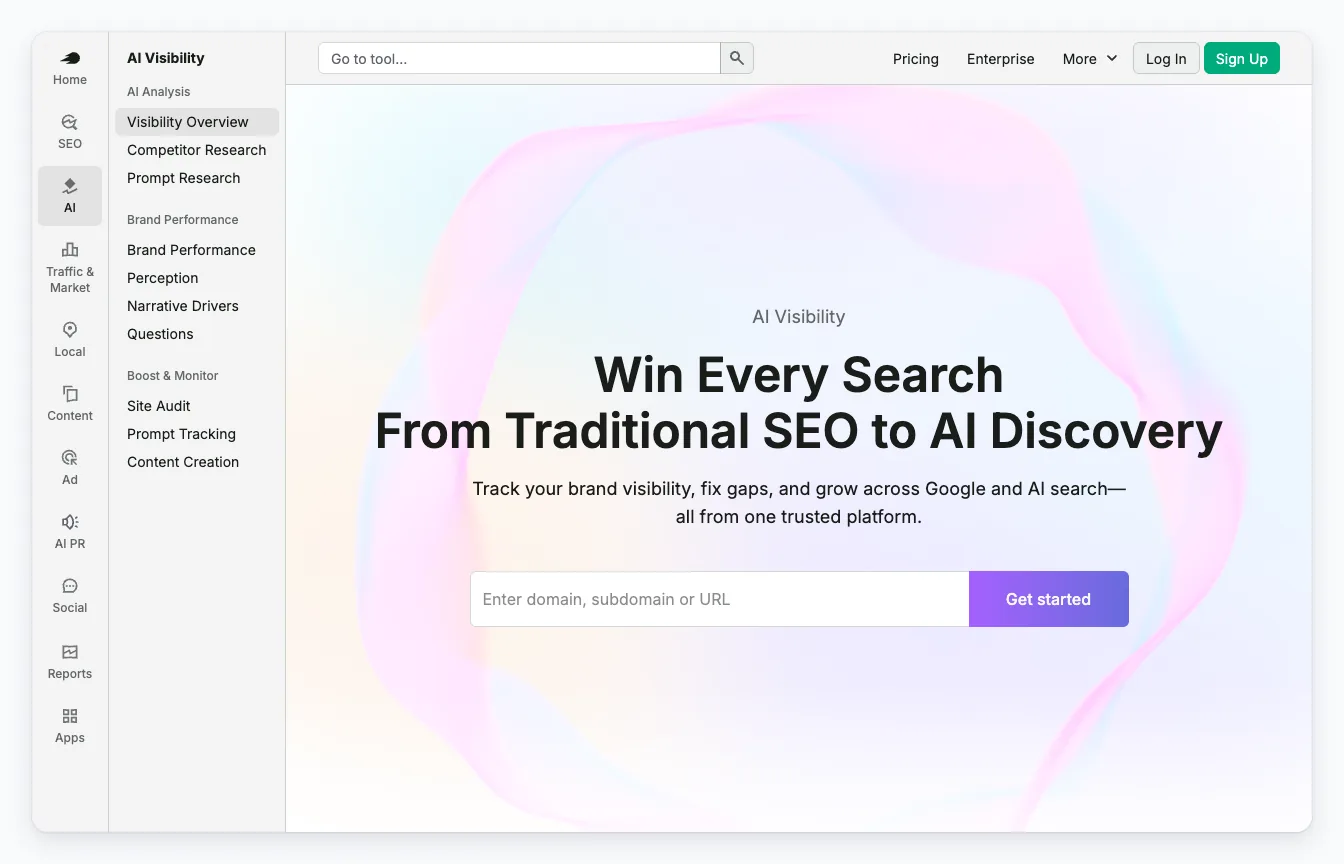
If your SEO already runs in Semrush, its AI Visibility Toolkit puts AI tracking in the same account. Its strength is research rather than tracking: a large prompt database with topic volume and difficulty shows which questions people ask in your category before you pick prompts.
What you get on the entry plan:
Watch out for:
Setup cost: $159/month for 75 prompts on 2 of the 4 engines. Pricing: [14].
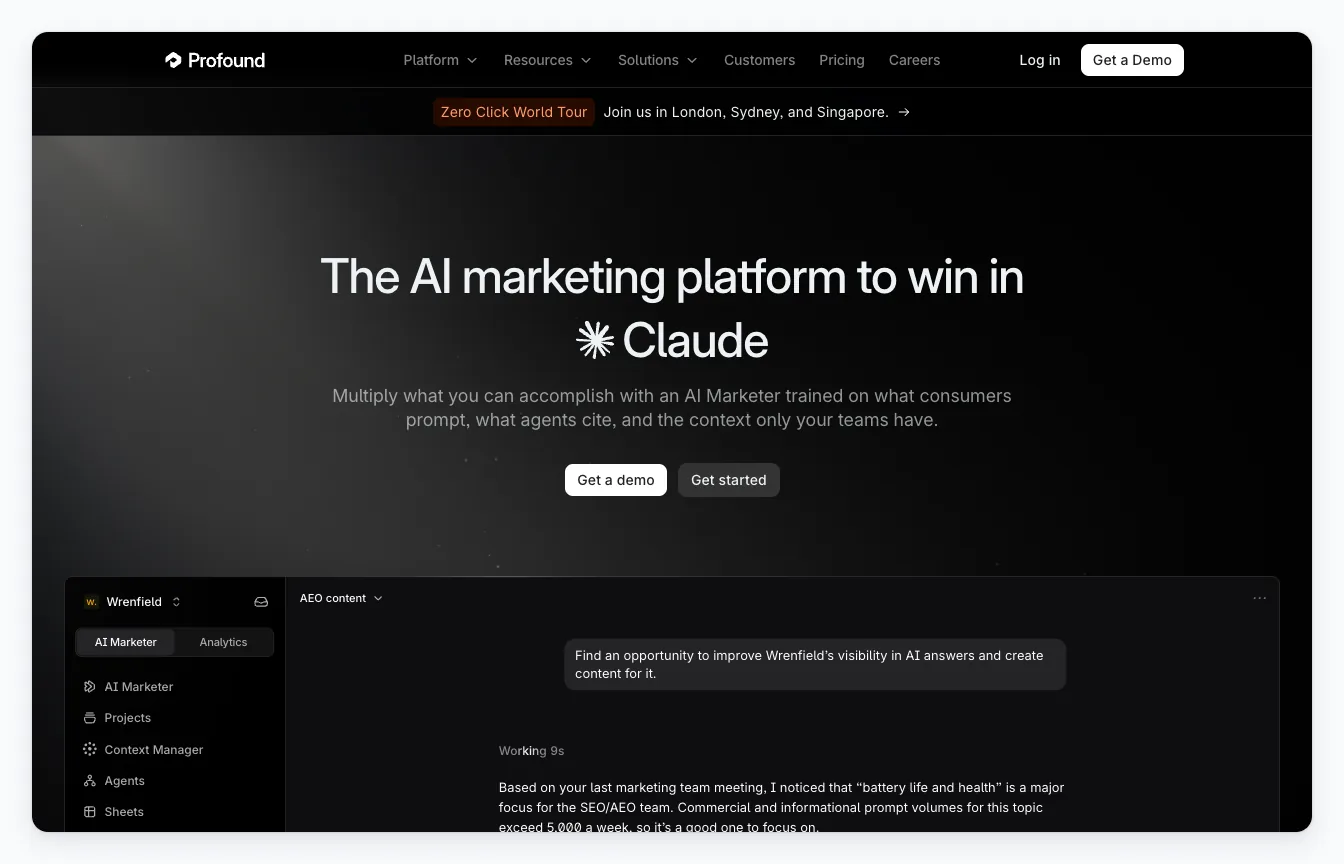
Profound is built for large brands with many products, regions and stakeholders. Brands can't buy a self-serve paid plan: there's a free 7-day trial, then an Enterprise contract. For an enterprise SaaS company, the integrations list is a strong point: it includes G2, Gong, Slack, Looker and Google Drive.
What you get on the entry plan:
Watch out for:
Setup cost: custom. Pricing: [17].
If a buyer already knows and trusts you, that relationship is worth keeping when they change jobs. KeepSync tracks job changes for your HubSpot contacts and alerts your team when a champion lands at a new company. Plans start at $79/month for up to 1,000 contacts.
Yes, for a handful of prompts, but it doesn't scale. AI answers change between runs, accounts and locations, so one manual check tells you little. The standard setup in this guide is about 6,000 answers a month. A sensible middle path is to test 10 to 15 prompts by hand in a logged-out browser first, then buy a tool once you know which prompts matter.
Start with category prompts ("best [category] for [segment]") and alternatives prompts ("[competitor] alternatives"), because they decide whether you make the shortlist. Add comparison prompts for your top two or three competitors next, then integration and price prompts. Write them the way a buyer would type them, including segment and use case, rather than as short keywords.
Between $29 and about $250 a month for most self-serve tools, as of October 2026. Otterly's Lite plan costs $29 for 15 prompts. A fuller setup of 50 daily prompts on four engines ranges from $55.50 in ZipTie to $248 in Otterly. Enterprise tools like Profound price by contract.
Yes. HubSpot AEO tracks your brand in ChatGPT, Gemini and Perplexity daily, for $50 a month with 25 prompts, and it doesn't require a HubSpot subscription. It's also included in Marketing Hub Professional and Enterprise. It doesn't cover Google AI Overviews, and CRM-powered recommendations need Marketing Hub Professional or Enterprise.
Start with the pages the AI cites in that answer. If it leans on a G2 category, a comparison post or an "alternatives" roundup that leaves you out, work on those: collect reviews, ask the author for an update, or publish your own honest comparison page. Then make sure your site states plainly who the product is for and what it integrates with.