
Digital Marketing
·
April 10, 2026
How SaaS Companies Handle Billing Disputes & Chargebacks
Learn how SaaS billing disputes happen, what triggers chargebacks, and how both sides can resolve them faster.

An affordable approach helps mid-market sales teams track job changes, keep CRM data fresh, and act on new decision-makers fast.


Looking for an affordable way to track job changes and keep your sales pipeline active? Mid-market teams often struggle to find decision-makers at the right time. Tools like KeepSync, Apollo.io, Boomerang, and ZoomInfo can help by monitoring role transitions, updating CRM data, and automating outreach. This saves time, reduces data decay, and boosts conversion rates - especially since new executives make spending decisions within their first 100 days.
Here’s a quick breakdown:
Key takeaway: For mid-market teams using HubSpot, KeepSync offers a low-cost, easy-to-set-up solution with transparent pricing and automation. Try the Starter plan ($79/mo) to see if it fits your needs.
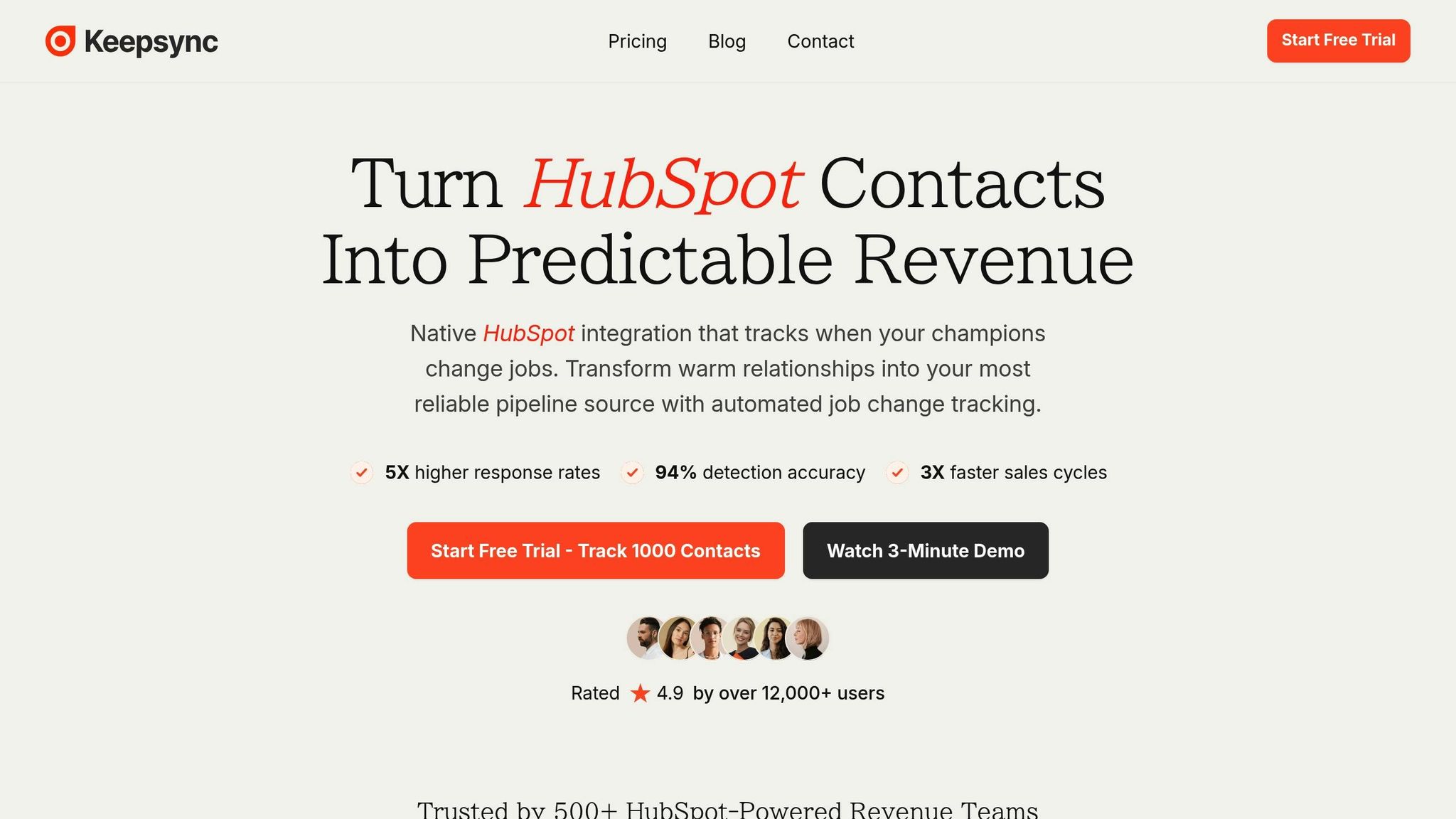
KeepSync is tailored for HubSpot users seeking a dependable and cost-effective way to track job changes. It monitors your contacts weekly across 30+ sources and achieves an impressive 94% accuracy in detecting role transitions.
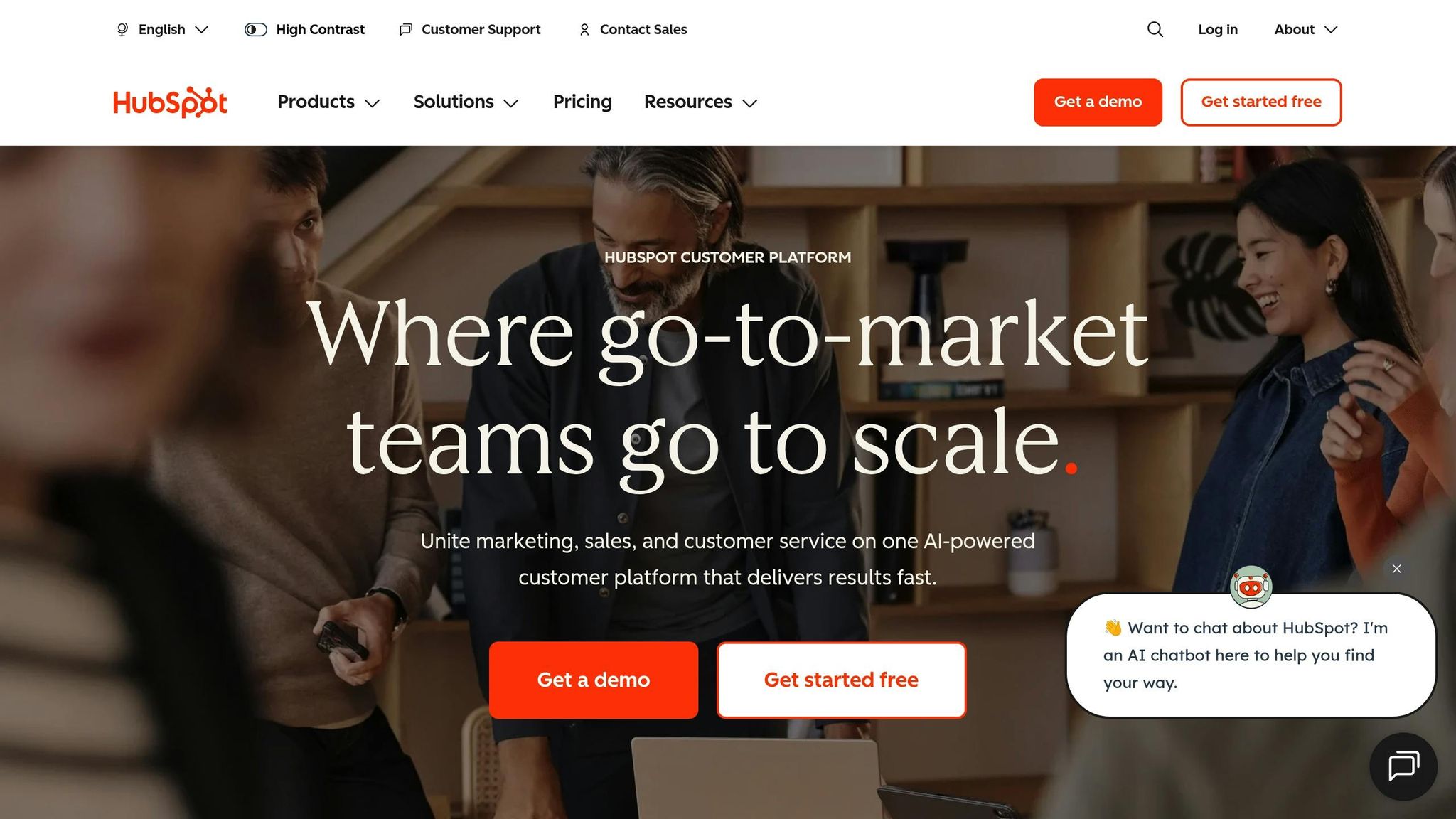
With its native HubSpot integration, KeepSync offers a smooth and quick setup - taking about five minutes. Once connected, it works entirely within your HubSpot environment. When a contact changes jobs, KeepSync automatically updates their record with verified information, such as new email addresses, phone numbers, and company details. You can also configure automated workflows to instantly update records and initiate follow-up actions, cutting down on manual data entry.
Real-time notifications are sent via Slack, email, or HubSpot alerts, so your team can act fast when a key contact moves to a new role. Up next, let’s look at how KeepSync’s pricing and scalability make it a great fit for mid-sized teams.
KeepSync’s pricing is budget-friendly for mid-market teams. The Starter plan is free, allowing you to monitor up to 1,000 contacts per month - perfect for testing the platform with your high-priority accounts. For teams needing more, the Team plan is $149/month, covering 5,000 contacts and including priority support and Slack alerts. Additional contacts cost $0.02 each.
Opting for annual billing can save you money: the Team plan is $1,490/year, while the Agency plan, designed for tracking up to 20,000 contacts, costs $3,990/year. There are no long-term contracts or hidden fees - you can adjust your plan or cancel anytime. For example, monitoring 5,000 contacts annually would cost about $1,788.
KeepSync ensures you stay informed by scanning contacts weekly across various data sources. Its automated verification process minimizes false positives, so you only get accurate updates.
The platform also provides pipeline analytics, helping you measure the success of your job change outreach efforts. You can track response rates, assess the revenue impact of your tracking, and use these insights to fine-tune your strategy and demonstrate value to your leadership team.
KeepSync is versatile, supporting multiple tracking scenarios. Whether it’s following former champions who’ve joined new companies or reconnecting with contacts from closed-lost deals who now hold decision-making power, the platform has you covered. For technical teams, API access and webhooks (included in the Team plan and higher) allow for custom integrations. However, most users find that HubSpot’s native workflows handle everything seamlessly - no developers needed.
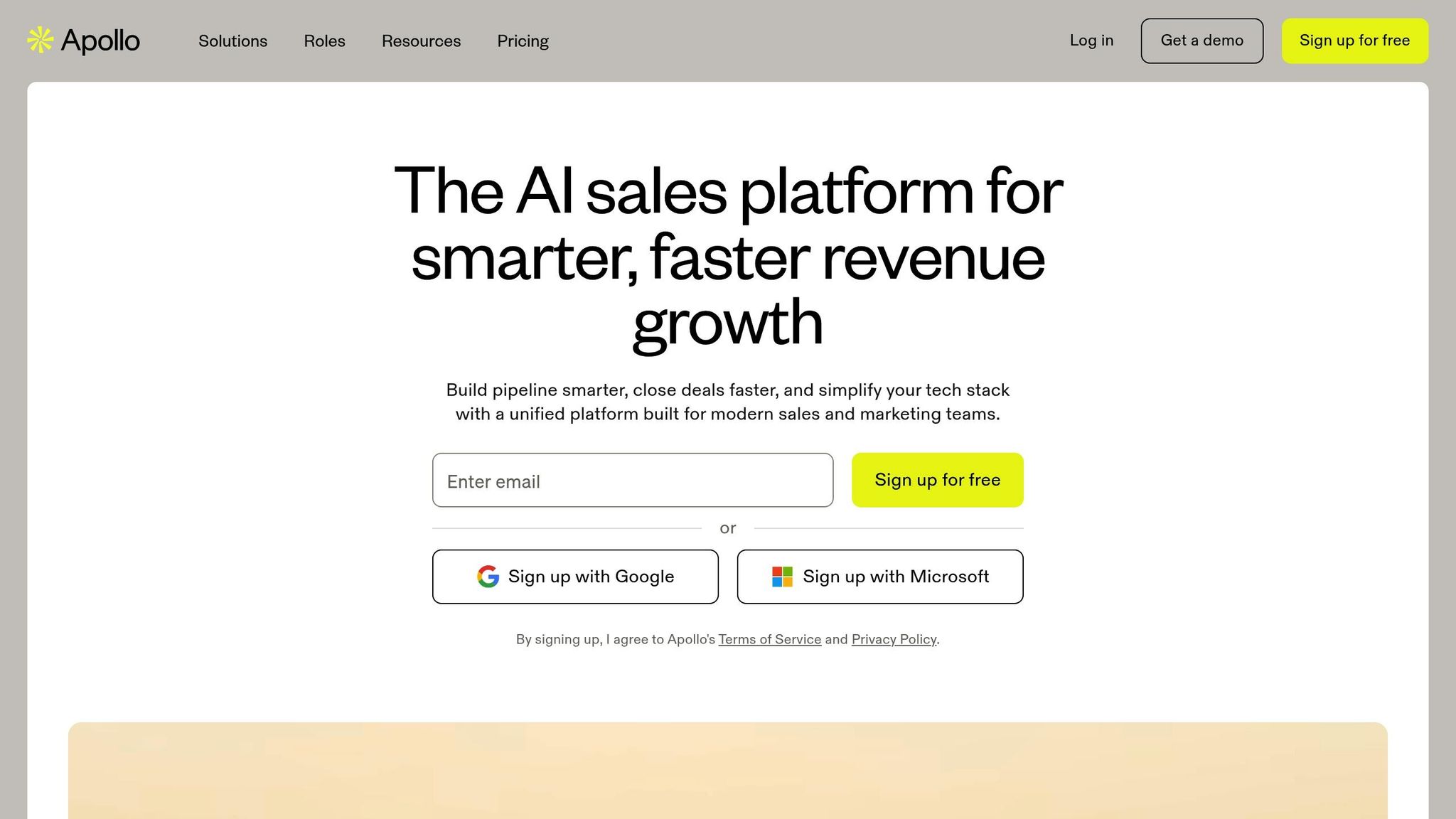
Apollo.io is a sales intelligence platform that combines prospecting, outreach, and data enrichment into one tool. It’s particularly useful for mid-market teams looking to track role changes within their contact database and take action quickly.
The platform boasts an extensive database with 210 million contacts and 30 million companies. It verifies email addresses and phone numbers while offering advanced filters to narrow down searches by job title, seniority, company size, industry, location, and buyer intent. These features make it easier to spot contacts who may have recently transitioned into new roles. Apollo.io emphasizes that its data is kept up-to-date, helping sales teams sell smarter and maintain a healthier pipeline [1].
Apollo.io integrates with HubSpot, but users need to switch between the two systems to fully utilize Apollo.io’s prospecting and outreach tools. This setup might require teams to adjust their workflows, especially if they’re accustomed to tools that operate directly within HubSpot.
Apollo.io offers pricing plans tailored to the needs of growing sales teams. According to the platform, it can reduce tech stack costs by 64% by consolidating multiple tools like data providers, outreach platforms, dialers, enrichment tools, and CRMs. This could translate into significant savings for teams - potentially thousands of dollars each year [1]. For mid-market teams, the value depends on whether the platform’s broad range of features fits within their budget and priorities.
Apollo.io’s automation features stand out as a key benefit. The platform uses buyer intent signals to identify profile changes, such as job transitions, and triggers AI-powered tools like call summaries, follow-ups, and task creation. Users can create sequences and workflows that activate under specific conditions, allowing for precise lead targeting. However, setting up job change detection requires combining several data points, as Apollo.io doesn’t offer a dedicated feature for this purpose. While it excels at identifying and reaching new prospects, teams focused solely on tracking role changes within their existing database might find themselves using more features than they actually need [1].
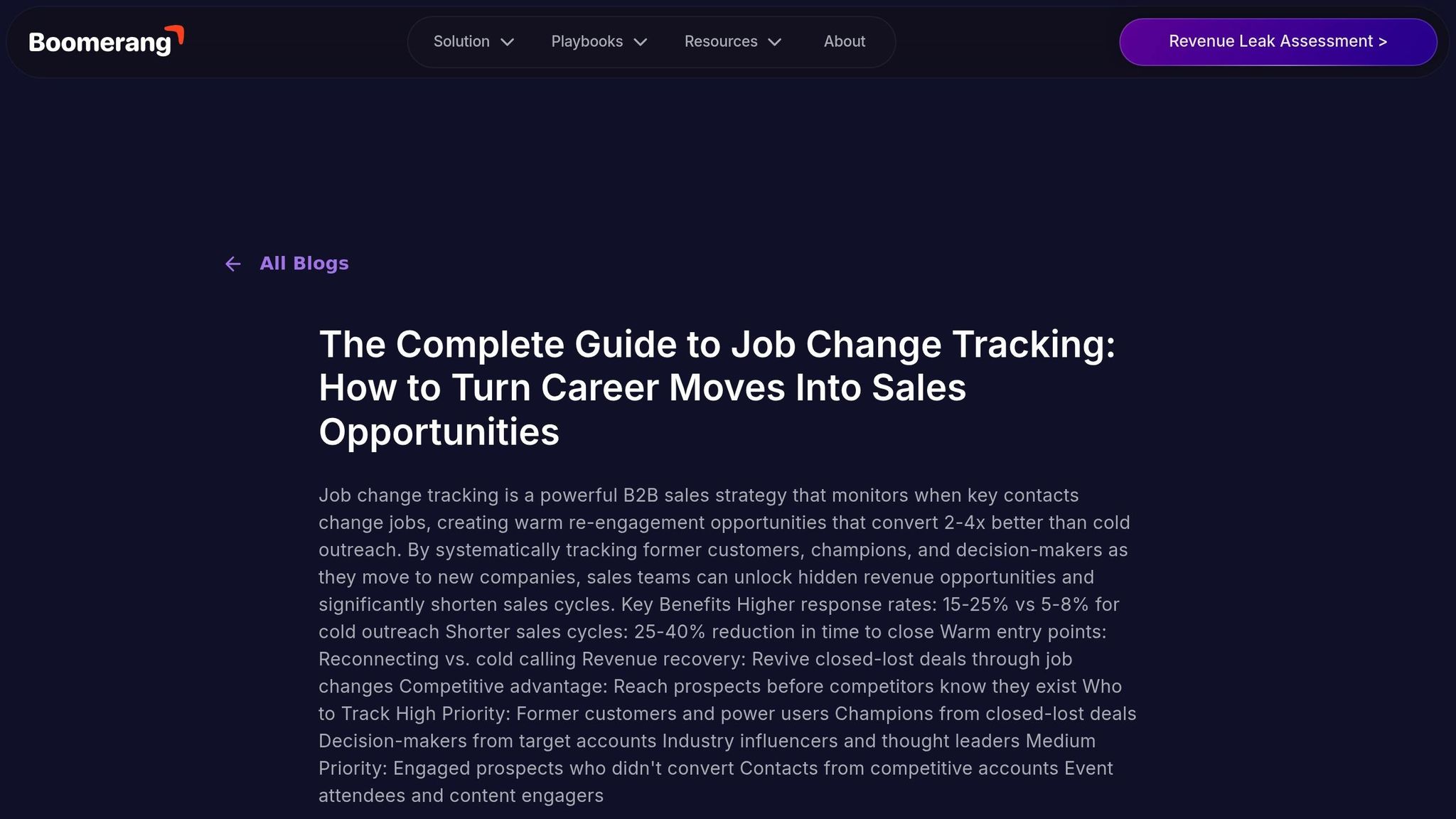
Boomerang is described as a tool for tracking job changes, but there’s little publicly available information about its features and functionality.
Details about Boomerang’s data sources and accuracy are scarce. Without this information, it’s tough for teams to gauge how effective the platform is at tracking job changes. This lack of transparency makes it challenging to fully assess its reliability.
Information on how Boomerang integrates with HubSpot is not readily available. For teams that depend on HubSpot to manage workflows, this absence of documentation could complicate their decision-making process.
Boomerang does not disclose its pricing or scalability options publicly. Teams interested in these details will need to reach out to the company directly. Additionally, there’s no public information about its automation features or alerting capabilities, which leaves potential users guessing about how well it supports automated workflows for tracking job changes.
Given the limited details available, teams may want to compare Boomerang’s uncertainties against the more transparent documentation provided by other tools in the market.
ZoomInfo SalesOS offers access to a database of over 100 million contacts, providing a wealth of detailed contact intelligence. With a G2 rating of 4.5 out of 5 [3], the platform delivers tools like direct dials, verified emails, mobile numbers, organizational charts, intent data, and CRM enrichment to help sales teams connect with prospects more effectively.
One of ZoomInfo's standout features is its ability to provide actionable insights on prospects, customers, and opportunities. The platform’s detailed contact information, paired with organizational charts and intent data, helps sales teams identify decision-makers and recognize buying signals. This makes it easier to understand company hierarchies and plan outreach strategies. Additionally, its reliable data ensures CRM updates are precise, supporting better targeting and integration into existing workflows.
ZoomInfo integrates directly with HubSpot, allowing for automatic updates to contact records. This integration ensures your CRM remains up-to-date with minimal manual effort. However, the platform uses a credit-based model for accessing data, meaning teams need to monitor usage carefully to maintain a steady flow of current and relevant information.
The platform operates on a quote-based pricing system with credit limits and multi-year contracts. While ZoomInfo is tailored for larger enterprises, mid-market teams can also benefit from its features - though the pricing may be a stretch for smaller budgets [2]. Its scalability is best suited for organizations with the resources to commit to its cost structure.
ZoomInfo’s SalesOS leverages intent data to automate outreach workflows. For mid-market teams, these automation tools can simplify lead generation by triggering timely alerts, such as notifications about job changes. These features help sales teams act quickly and stay ahead of opportunities.
When choosing a job change tracking tool, mid-market teams need to consider factors like accuracy, pricing, integrations, and automation. Each of these elements can significantly impact efficiency and costs. Here's a breakdown of how the leading tools stack up:
| Feature | KeepSync | Apollo.io | Boomerang | ZoomInfo |
|---|---|---|---|---|
| Accuracy | 94% via multi-source validation | Unified platform with extensive contact data | Focused on job change monitoring | Comprehensive contact intelligence with verified details and intent data |
| Pricing Model | Transparent per-contact pricing starting at $79/month (Starter), $149/month (Team), $399/month (Agency) | Scalable pricing plans; specific pricing not publicly disclosed | Subscription-based with tiered options | Custom quotes typically targeted at larger enterprises |
| HubSpot Integration | Native, rapid setup within HubSpot | Direct CRM integration with bi-directional sync | Compatible with HubSpot for contact enrichment | Integrates with HubSpot to support automated contact updates |
| Automation Features | Real-time alerts via Slack, email, or HubSpot; automated lead routing; pipeline analytics | Integrated outreach automation | Trigger-based job change alerts | Intent-signal driven automated workflows |
| Best For | Mid-market teams seeking a HubSpot-native solution with transparent pricing | Teams looking to consolidate multiple tools into one platform | Organizations focused on job change tracking | Larger enterprises in need of comprehensive contact intelligence |
KeepSync stands out with its transparent pricing and a 94% accuracy rate, thanks to multi-source validation. Starting with a Starter plan for up to 1,000 contacts, it offers scalable options for growing teams. The native HubSpot integration ensures a quick 5-minute setup, allowing sales teams to track job changes without additional technical challenges. Its seamless workflows within HubSpot are ideal for mid-market teams looking for simplicity and precision.
Apollo.io combines multiple sales tools into a single platform, offering features like outreach, data enrichment, and CRM integration. According to the company, users can save up to 64% on tech stack costs compared to purchasing separate tools for these functions [1]. This makes it a great option for teams aiming to streamline their technology stack. However, the lack of publicly disclosed pricing means teams will need to contact sales for a quote.
Boomerang specializes in tracking job changes and delivering timely notifications when key career moves happen. While it excels in this niche, teams may need to evaluate whether a single-purpose tool like Boomerang can meet their broader sales intelligence needs. For tasks like contact enrichment and outreach automation, additional tools might be required.
ZoomInfo offers extensive contact intelligence, including detailed organizational insights and intent data. Its pricing, typically based on custom quotes, is geared toward larger enterprises. While mid-market teams can benefit from its robust features, the higher costs and longer commitments demand a careful ROI assessment. ZoomInfo’s use of intent signals to trigger automated workflows can also help teams take proactive action.
Pricing: Budget allocation is a critical factor for mid-market teams. KeepSync’s straightforward pricing allows for accurate forecasting based on contact volume. Apollo.io’s bundled approach might reduce overall costs, while ZoomInfo’s enterprise-level pricing requires a larger investment. Boomerang’s specialized focus may need to be supplemented with other tools for a complete solution.
Automation: Automation capabilities vary widely. KeepSync integrates deeply with HubSpot to handle monitoring, alerts, and lead routing. Apollo.io offers unified automation across multiple sales tasks, while ZoomInfo uses intent data to drive proactive workflows. Boomerang’s strength lies in delivering timely job change notifications.
Integration: For teams already using HubSpot, integration depth is crucial. KeepSync’s native integration ensures that job change data, alerts, and workflows operate entirely within HubSpot, eliminating manual data transfers. Apollo.io and ZoomInfo also offer CRM integrations, though these may require additional setup, potentially delaying action on new intelligence.
Accuracy: KeepSync leads with a 94% accuracy rate through a mix of automated and human verification. Apollo.io relies on its unified data approach, while ZoomInfo provides extensive organizational insights. Boomerang prioritizes timely alerts, which may suit teams that value speed over broader data coverage.
Select a tool that aligns with your team's specific requirements, budget, and existing tech stack. If your team already uses HubSpot, KeepSync stands out as a compelling option. With transparent pricing that simplifies financial planning, a 94% accuracy rate, and seamless native integration with HubSpot, it ensures reliable tracking of job changes. Plus, its quick setup - usually under five minutes - reduces the need for IT support and speeds up the time it takes to see results. As highlighted in the comparisons, KeepSync offers a solid mix of cost-effectiveness and efficiency, making it a smart choice for HubSpot users, especially mid-sized teams looking to refine their sales process.
For teams prioritizing fast ROI and smoother operations, consider how the tool's features align with your workflow and growth goals. Testing a trial or starter plan can help confirm its data accuracy and compatibility with your systems. If your revenue team values immediate outcomes, predictable costs, and an effortless HubSpot integration, the Starter plan ($79/mo) is a great place to begin.
KeepSync achieves an impressive 94% accuracy rate when tracking job changes, thanks to its sophisticated data aggregation and verification systems. These tools work around the clock, pulling and confirming job updates from a variety of trusted sources to ensure the information stays up-to-date and reliable.
On top of that, KeepSync employs AI-powered algorithms to double-check and fine-tune the data, reducing the chance of errors or mismatches. This means your team can confidently use these job change insights to boost lead generation efforts and fuel sales growth.
KeepSync’s integration with HubSpot makes tracking job changes a breeze for mid-market sales teams. By syncing directly with HubSpot, this tool automates the process of spotting job changes, so your team stays updated on leads and existing contacts without lifting a finger.
This connection isn’t just about convenience - it’s about results. It saves time, sharpens lead targeting, and keeps your pipeline running smoothly. With real-time updates and actionable insights, your team can spend less time on manual tracking and more time building relationships and closing deals. Plus, it helps you get the most out of your investment with smarter automation driving better outcomes.
KeepSync offers automation tools that simplify job change tracking for mid-market sales teams, ensuring potential opportunities don't slip through the cracks. By syncing effortlessly with HubSpot CRM, it takes care of updating job change data automatically, cutting down on manual work and saving valuable time.
This updated information empowers teams to uncover new leads, reconnect with former contacts, and tailor their outreach efforts. The result? Stronger lead generation and more effective sales pipeline growth. With KeepSync, your team can concentrate on nurturing relationships while the platform manages the tedious task of tracking and updating job changes.